The Effect of STEM-Integrated Project Based Learning on Students’ Critical Thinking Skills in Environmental Pollution Material in Junior High School
DOI:
https://doi.org/10.30736/seaj.v8i2.1463Keywords:
environmental pollution, Project-Based Learning, Junior high school, STEM, critical thinkingAbstract
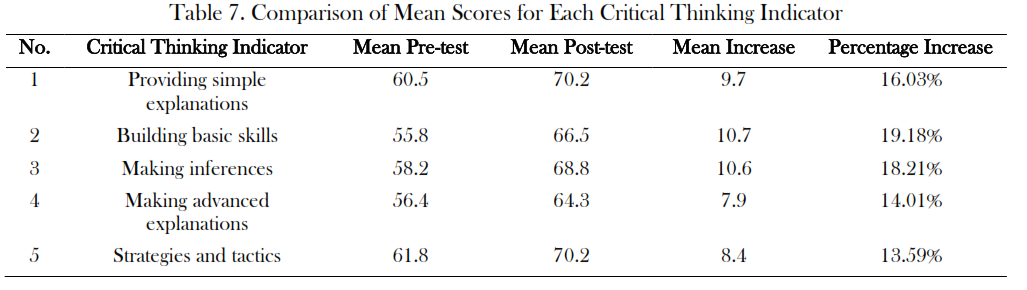
The purpose of this research is to analyze the effect of the implementation of PjBL or “Project Based Learning” integrated with STEM on students’ critical thinking skills in environmental pollution material in junior high school. A quantitative approach was used through a pre-experimental design in the form of “One Group Pre-test-Post-test Design”. The research subjects consisted of 30 seventh-grade junior high school students selected through purposive sampling. Data were collected using an essay test instrument developed based on critical thinking skill indicators as explained by Ennis. Furthermore, the data were analyzed through the Shapiro-Wilk normality test, paired sample t-test, and N-Gain analysis. The analysis showed that the pretest and post-test data were normally distributed. Hypothesis testing showed a significant difference between students’ critical thinking skills before and after the treatment through the value < 0.001. The average N-Gain value was 0.3993, which was in the moderate category. These findings indicate that the implementation of STEM-integrated PjBL is quite effective in improving students’ critical thinking skills in environmental pollution material.
Downloads
References
Ennis, R. H. (1996). Critical thinking. New Jersey: Prentice Hall.
Finken, M., & Ennis, R. H. (1993). Illinois Critical Thinking Essay Test. Illinois: Illinois Critical Thinking Project, University of Illinois.
Fitriani, A., & Mutakinati, L. (2023). Penerapan pembelajaran STEM berbasis proyek terhadap kemampuan berpikir kritis murid. Jurnal Pendidikan Sains, 11(2), 145–158.
Hake, R. R. (1998). Interactive-engagement versus traditional methods: A six-thousand-student survey of mechanics test data for introductory physics courses. American Journal of Physics, 66(1), 64–74.
Lestari, D., Suryani, N., & Nugroho, A. (2025). Implementasi Project Based Learning berbasis STEM dalam meningkatkan keterampilan berpikir kritis murid. Jurnal Pendidikan Indonesia, 14(1), 23–36.
Permanasari, A., Fitriani, A., & Riandi, R. (2021). Pembelajaran berbasis proyek dalam meningkatkan keterlibatan kognitif murid pada konteks STEM. Jurnal Pendidikan IPA Indonesia, 10(3), 398–410.
Pratama, R., Hidayat, A., & Susanti, E. (2022). Analisis pembelajaran konvensional dan dampaknya terhadap kemampuan eksplorasi murid. Jurnal Penelitian Pendidikan, 39(2), 112–125.
Sari, D. P., & Rahmawati, Y. (2024). Implementasi keterampilan 4C dalam pembelajaran abad 21. Jurnal Inovasi Pendidikan, 8(1), 45–58.
Zubaidah, S. (2024). Literasi lingkungan dalam konteks pendidikan 4.0: Tantangan dan strategi pengembangan. Jurnal Pendidikan Biologi, 15(2), 78–92.
Yustina, Y., Syafii, W., Vebrianto, R., et al. (2021). Description of students' critical thinking skills in integrated PjBL STEM learning environmental change material. Journal of Innovative Science Education, 10(3).
Sutamrin, & Khadijah. (2021). Analisis kemampuan berpikir kritis dalam Project Based Learning aljabar elementer. Equals: Jurnal Ilmiah Pendidikan Matematika, 4(1).
Dewanti, B. A., Santoso, A., & Septaria, K. (2021). Assessment of critical thinking skills in STEM-based science learning through project assignments. Atlantis Press Proceedings.
Isro, A. L., Anggraito, Y. U., & Bintari, S. H. (2021). Description of students' critical thinking skills in integrated PjBL-STEM learning environmental change material. Journal of Innovative Science Education, 10(3), 237–243. https://doi.org/10.15294/jise.v10i1.43920
Dewanti, B. A., Santoso, A., & Septaria, K. (2021). Assessment of critical thinking skills in STEM-based science learning through project assignments. In Proceedings of the 6th International Seminar on Science Education (ISSE 2020) (pp. 824–831). Atlantis Press. https://doi.org/10.2991/assehr.k.210326.119
Bulu, V. R., & Tanggur, F. (2021). The effectiveness of STEM-based PjBL on students' critical thinking skills and collaborative attitude. Al-Jabar: Jurnal Pendidikan Matematika, 12(1), 219–228. https://doi.org/10.24042/ajpm.v12i1.8831
Faridah, F., Luthfiyati, D., Fatmawaty, R., Asrori, M., Sukardi, S., Septaria, K., & Zamroni, M. R. (2026). Peningkatan Kapasitas Publikasi Ilmiah Guru MIUS Lamongan melalui Pelatihan Pemetaan Bibliometrik dan Pendekatan Futures Thinking. Bhakti Nusantara: Jurnal Pengabdian Kepada Masyarakat, 2(1), 25-43.
Huda, M., Septaria, K., Rosdiana, S. R., Shafikha, R., & Salami, W. (2026). DEVELOPING AUGMENTED REALITY-BASED LEARNING MEDIA FOR TSUNAMI MITIGATION TO ADDRESS STUDENT MICRO-LEARNING CHALLENGES. JPPIPA (Jurnal Penelitian Pendidikan IPA), 11(1), 33-47.
Fatharani, A., Madlazim, M., Anggaryani, M., Satriawan, M., & Septaria, K. (2026). Learning from Earthquakes: The Role of Socio-Scientific Issues in Developing Students’ Science Argumentation Skills. Prisma Sains: Jurnal Pengkajian Ilmu dan Pembelajaran Matematika dan IPA IKIP Mataram, 14(1), 123-143.
Hendratmoko, A. F., Fauziah, A. N. M., Susiyawati, E., Astriani, D., Nurita, T., Martini, M., ... & Boey, A. (2026). Integrating ChatGPT-driven self-assessment and Debate Based on Inquiry Learning (DBOIL) to enhance students’ argumentation skills: Leveraging AI for quality science learning aligned with SDG 4. In E3S Web of Conferences (Vol. 696, p. 02005). EDP Sciences.
Septaria, K., Asrori, M., Setyo, C. Y., Faridah, F., Anam, M. K., Sukardi, S., & Kholiq, A. (2025). Pemberdayaan Guru Ma'arif melalui Pemanfaatan Deep Learning Engagement Tools untuk Peningkatan Literasi Digital dan Pedagogis. Bhakti Nusantara: Jurnal Pengabdian Kepada Masyarakat, 1(1), 25-39.
Septaria, K., Fatharani, A., & Baihaqi, A. (2025). Are Scrapbooks Able to Increase Tsunami Disaster Literacy? An Analytical Study of Junior High School Students Materials. SEJ (Science Education Journal), 9(2), 115-133. https://doi.org/10.21070/sej.v9i2.1656
Septaria, K., Fatharani, A., Supardi, Z. A. I., Suyono, S., & Regita, M. A. (2025). Pengembangan Sikap Ilmiah Abad 21 Melalui Lembar Kerja Berbasis Teori Pembelajaran Sosial pada Materi Listrik Statis. Jurnal Penelitian Sains dan Pendidikan (JPSP), 5(1), 65-86. https://doi.org/10.23971/jpsp.v5i1.9758
Sho'idah, Y., Septaria, K., & Wulandari, S. A. (2025). Analysis of Student Scientific Communication Based on The Development and Use of Diorama Media Using The Guided Inquiry Model. Reforma: Jurnal Pendidikan dan Pembelajaran, 15(1), 24-47. https://doi.org/10.30736/reforma.v15i1.1207
Hendratmoko, A. F., Puspitarini, S., Budiyanto, M., Rahman, N., Septaria, K., & Marpuah, S. (2025). Think-Aloud Protocol as a Method for Exploring and Understanding the Argumentation Skills of Pre-Service Science Teachers. Prisma Sains: Jurnal Pengkajian Ilmu dan Pembelajaran Matematika dan IPA IKIP Mataram, 13(2), 268-282. https://doi.org/10.33394/j-ps.v13i2.15214
Septaria, K., Fatharani, A., Dewanti, B. A., & Najawa, W. C. (2024). Designing Pirposal-learning based Module integrated with Socio-Scientific Issue to Enhance Students’ Scientific Reasoning Skill. Indonesian Journal of Mathematics and Natural Science Education, 5(2), 122-134. https://doi.org/10.35719/mass.v5i2.162
Septaria, K., Nissak, K., & Wulandari, S. A. (2023). Student Identity and Guided Inquiry Learning in Junior High School Students: A Correlation Analysis. Jurnal Penelitian Pendidikan IPA, 9(10), 8351-8358. https://doi.org/10.29303/jppipa.v9i10.4584
Septaria, K., Dewanti, B. A., & El Afidah, M. I. (2020). Development of module disaster mitigation based on STEM for secondary schools. JPPIPA (Jurnal Penelitian Pendidikan IPA), 5(2), 61-68. https://doi.org/10.26740/jppipa.v5n2.p61-68
Septaria, K. (2019). Mengeksplorasi Argumentasi dan Pengetahuan Pendidik Ilmu Pengetahuan Alam (IPA) tentang Pemanasan Global. PEDAGOGIA: Jurnal Pendidikan, 8(2), 247-256. https://doi.org/10.21070/pedagogia.v8i2.2369
Septaria, K., & Fatharani, A. (2022). Analisis Penggunaan Software PlantNet Terhadap Pemerolehan Konsep Dan Keterampilan Prosedural Siswa. Indonesian Journal of Educational Science (IJES), 5(1), 73-83. https://doi.org/10.31605/ijes.v5i1.1604
Septaria, K., Dewanti, B. A., & Habibbulloh, M. (2019). Implementasi metode pembelajaran spot capturing pada materi pemanasan global untuk meningkatkan keterampilan proses sains. Prisma Sains: Jurnal Pengkajian Ilmu dan Pembelajaran Matematika dan IPA IKIP Mataram, 7(1), 27-37. https://doi.org/10.33394/j-ps.v0i0.1379
Septaria, K., & Fatharani, A. (2022). Manga versus webtoon: Alternative science learning module based on Dr Stone. Jurnal Inovasi Pendidikan IPA, 8(1), 11-22. https://doi.org/10.21831/jipi.v8i1.43389
Septaria, K., & Haque, E. H. (2022). Upaya Peningkatan Pengetahuan Masyarakat terhadap Covid-19 Menggunakan Media Poster. TAAWUN, 2(02), 115-124.
Septaria, K., Sholihin, M., Kholiq, A., Hayati, E., & Maulana, V. I. P. (2022). Peningkatan Kualitas Pendidik dan Pembelajaran Menuju Madrasah yang Ungggul dan Berkelanjutan. Jurnal Berdaya Mandiri, 4(2), 167-181. https://doi.org/10.31316/jbm.v4i2.1742
Downloads
Published
How to Cite
Issue
Section
License
Copyright (c) 2026 Berlyana Dela Puspita Amalia, Hari Wisodo, Ferdi Dwi Sagitha

This work is licensed under a Creative Commons Attribution-ShareAlike 4.0 International License.
Authors who publish with this journal agree to the following terms:
- Authors retain copyright and grant the journal right of first publication with the work simultaneously licensed under a Creative Commons Attribution-ShareAlike 4.0 International License that allows others to share the work with an acknowledgment of the work's authorship and initial publication in this journal.
- Authors are able to enter into separate, additional contractual arrangements for the non-exclusive distribution of the journal's published version of the work (e.g., post it to an institutional repository or publish it in a book), with an acknowledgment of its initial publication in this journal.
- Authors are permitted and encouraged to post their work online (e.g., in institutional repositories or on their website) prior to and during the submission process, as it can lead to productive exchanges, as well as earlier and greater citation of published work (See The Effect of Open Access).

This work is licensed under a Creative Commons Attribution-ShareAlike 4.0 International License.