Mapping the Paradigm Shift in Natural Science Education: A Structural Analysis of Problem-Based Learning and Socio-scientific Reasoning (2016–2026)
DOI:
https://doi.org/10.30736/reforma.v16i2.1374Keywords:
critical thinking, problem-based learning, Active Learning , Higher-Order Thinking Skills, Scientific InquiryAbstract
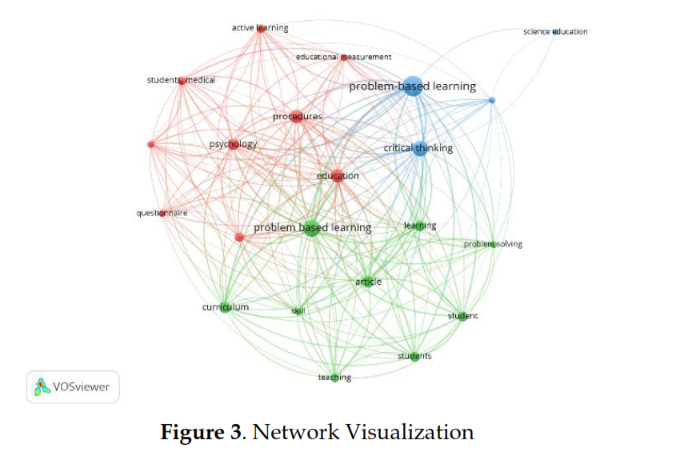
The escalating complexity of global socioscientific issues demands an urgent paradigm shift in natural science education toward frameworks that rigorously cultivate higher-order socioscientific reasoning. However, while problem-based learning (PBL) is widely applied, the literature remains fragmented, creating a pedagogical bottleneck that obscures clear pathways for structural instructional design. This study analyzes the research trajectory of critical thinking and PBL using a bibliometric analysis combined with a systematic literature review (SLR) based on the PRISMA protocol. Data from the Scopus database (2016–2026) yielded 99 eligible articles from an initial 433. The structural mapping reveals a paradigm shift from basic evaluation toward targeted problem-solving, with publications peaking in 2025 (29 articles) and driven prominently by contributors from the United States and Indonesia within core journals like Advances in Physiology Education. VOSviewer analysis identified three precise conceptual nodes: evidence-based pedagogical assessment, active learning implementation, and the conceptual nexus of PBL and critical thinking. The SLR synthesis indicates that PBL enhances these competencies specifically by scaffolding collaborative scientific inquiry and integrating blended active learning environments. Ultimately, these findings dictate that future instructional models must evolve beyond traditional boundaries, utilizing these structural nodes to design adaptive, technology-integrated curricula that effectively operationalize socioscientific reasoning.
Downloads
References
Abdul Khalil, S., Mohd Razif, N. F., & Rosele, M. I. (2024). Developing Ijtihad Skills for Undergraduate Students Through Problem-based Learning in Fiqh Subjects: Present Practices and The Way Forward. Asia Pacific Journal of Educators and Education, 39(2), 197–217. https://doi.org/10.21315/apjee2024.39.2.11
Abercrombie, S., Stuart, D. L., Aslan, C. E., Souther, S., & Petersen, B. C. (2023). Training community engaged climate adaptation leaders using multiple case study analysis: insights from cognitive learning sciences. Frontiers in Climate, 5. https://doi.org/10.3389/fclim.2023.1196467
Amador, J. A. (2019). Active learning approaches to teaching soil science at the college level. Frontiers in Environmental Science, 7(JUN). https://doi.org/10.3389/fenvs.2019.00111
Amin, S., Utaya, S., Bachri, S., & Susilo, S. (2020). Effect of problem-based learning on critical thinking skills and environmental attitude. Journal for the Education of Gifted Young Scientists, 8(2), 743–755. https://doi.org/10.17478/jegys.650344
Asy’ari, M. (2026). Conceptual problem-based learning model: Promising intervention to enhance prospective science teachers’ critical thinking skills. Social Sciences and Humanities Open, 13. https://doi.org/10.1016/j.ssaho.2026.102509
Barja-Ore, J., Liñan-Bermudez, A., Zagaceta-Guevara, Z., Landa-Maturrano, B. A., Guillen-Calle, B. E., & Chavesta, J. J. C. (2026). The Current State of Global Scientific Production on Problem-based Learning in Medical Education: A Bibliometric Analysis. Annals of African Medicine, 25(2), 431–437. https://doi.org/10.4103/aam.aam_312_25
Becker, T. B., Cardino, V. N., Lucas, J., & Fenton, J. I. (2024). Teaching critical thinking in nutritional sciences: a model course and assignments. Advances in Physiology Education, 48(2), 320–329. https://doi.org/10.1152/advan.00177.2023
Black, P. N. (2020). A revolution in biochemistry and molecular biology education informed by basic research to meet the demands of 21st century career paths. Journal of Biological Chemistry, 295(31), 10653–10661. https://doi.org/10.1074/jbc.AW120.011104
Brown, A. M., Lewis, S. N., & Bevan, D. R. (2016). Development of a structured undergraduate research experience: Framework and implications. Biochemistry and Molecular Biology Education : A Bimonthly Publication of the International Union of Biochemistry and Molecular Biology, 44(5), 463–474. https://doi.org/10.1002/bmb.20975
Brundidge, K., & McArthur, E. (2025). Beyond the discussion board: A scoping review of asynchronous online active learning. Journal of Professional Nursing, 57, 100–111. https://doi.org/10.1016/j.profnurs.2025.01.012
Carpenter, R. E., Coyne, L., Silberman, D., & Takemoto, J. K. (2022). Enhanced numeracy skills following team-based learning in United States pharmacy students: a longitudinal cohort study. Journal of Educational Evaluation for Health Professions, 19. https://doi.org/10.3352/jeehp.2022.19.29
Cheng, Z., Yang, J., & Shelnutt, K. P. (2025). Implementing GRATL and artificial intelligence in experiential learning of obesity physiology and etiology. Advances in Physiology Education, 49(4), 871–878. https://doi.org/10.1152/advan.00025.2025
Chengere, A. M., Bono, B. D., Zinabu, S. A., & Jilo, K. W. (2025). Enhancing secondary school students’ science process skills through guided inquiry-based laboratory activities in biology. PLoS ONE, 20(4 April). https://doi.org/10.1371/journal.pone.0320692
Chung, E. Y.-H. (2019). Facilitating learning of community-based rehabilitation through problem-based learning in higher education. BMC Medical Education, 19(1). https://doi.org/10.1186/s12909-019-1868-4
Crestani, T. B., Tamborindeguy, M., Nunes, F. B., Kohek, M. B. F., & Branchini, G. (2025). Old habits die hard? How to challenge students and professors to rethink the teaching and learning processes in biophysics using escape room-based games. Advances in Physiology Education, 49(3), 817–823. https://doi.org/10.1152/advan.00260.2023
De Silva, L., Rabel, C., Samita, S., Smith, N., McIntyre, L., Parkinson, T., & Wijayawardhane, N. (2023). Perceptions of Veterinary Undergraduates on the Novel Use of Problem-Based Learning as a Tool to Develop Their Critical Thinking Skills. Interdisciplinary Journal of Problem-Based Learning, 17(1). https://doi.org/10.14434/ijpbl.v17i1.33979
Ee, L. S., Chinn, L. Y., Zhifeng, Z., Ibrahim, N. H., Surif, J., Abdullah, N., & Fariduddin, M. N. (2023). Problem-based learning module of organic insecticide for the aborigine students in Malaysia. International Journal of Evaluation and Research in Education, 12(2), 818–825. https://doi.org/10.11591/ijere.v12i2.24373
Espitia, N. F., Zoran, D. L., Clendenin, A., Crosby, S. M., Dominguez, B., Ellis, C. L., Hilburn, A., Moyer, W., & Bissett, W. T. (2021). Direct measurement of veterinary student learning outcomes for the NAVMEC professional competencies in a multi-uservirtual learning environment. Journal of Veterinary Medical Education, 48(1), 33–47. https://doi.org/10.3138/JVME.0318-025R2
Essop, X. M. F., & Beselaar, L. (2020). Student response to a cooperative learning element within a large physiology class setting: Lessons learned. Advances in Physiology Education, 44(3), 269–275. https://doi.org/10.1152/ADVAN.00165.2019
Fontana-Rosa, N. S., González-de Paz, L., Codina-Rodríguez, A. C., Pérez-Riart, M., & Carrió-Llach, M. D. M. (2025). Perspectives of medicine, human biology, and nursing undergraduates on transversal skills learning: a mixed-methods study. BMC Medical Education, 25(1). https://doi.org/10.1186/s12909-025-06749-z
Gaddas, M., Ben Daly, A., Ben Dhiab, M., & Ben Saad, H. (2026). Rethinking active learning in medical education: a comparative study of inquiry-based and team-based learning on student performance and satisfaction. Advances in Physiology Education, 50(1), 22–31. https://doi.org/10.1152/advan.00199.2025
Ge, W.-L., Zhu, X.-Y., Lin, J.-B., Jiang, J.-J., Li, T., Lu, Y.-F., Mi, Y.-F., & Tung, T.-H. (2025). Critical thinking and clinical skills by problem-based learning educational methods: an umbrella systematic review. BMC Medical Education, 25(1). https://doi.org/10.1186/s12909-025-06951-z
Gill, K., Glazier, J., & Towns, B. (2018). Cultivating collaborations: Site specific design for embodied science learning. Integrative and Comparative Biology, 58(1), 127–139. https://doi.org/10.1093/icb/icy027
Guo, Q., Jamil, H., Ismail, L., Luo, S., & Sun, Z. (2024). Effects of problem-based learning on EFL learning: A systematic review. PLoS ONE, 19(12). https://doi.org/10.1371/journal.pone.0307819
Hegade, P., & Shettar, A. (2022). Effectiveness of Computational Thinking in Problem Based Learning. Journal of Engineering Education Transformations, 36(Special Issue 2), 179–185. https://doi.org/10.16920/jeet/2023/v36is2/23025
Hetmanenko, L. (2025). FOSTERING CREATIVITY IN STUDENTS VIA MATHEMATICAL LEARNING. International Journal for Quality Research, 19(1), 113–134. https://doi.org/10.24874/IJQR19.01-08
Hu, X., Li, J., Wang, X., Guo, K., Liu, H., Yu, Q., Kuang, G., Zhang, S., Liu, L., Lin, Z., Huang, Y., & Xiong, N. (2025). Medical education challenges in Mainland China: An analysis of the application of problem-based learning. Medical Teacher, 47(4), 713–728. https://doi.org/10.1080/0142159X.2024.2369238
Irawati, F. I. M., & Sulisworo, D. (2023). Utilising smart water monitoring with IoT in science learning with problem-based learning model: Impact on critical thinking skills and the role of learning interest. Journal of Pedagogical Research, 7(4), 69–80. https://doi.org/10.33902/JPR.202323708
Jensen, J. B. (2025). Creativity in Higher Education Finding the Problem in Problem-Based Learning. Journal of Problem Based Learning in Higher Education, 13(1), 1–24. https://doi.org/10.54337/ojs.jpblhe.v13i1.11015
Jones, C. K., & Lerner, A. B. (2019). Implementing a course-based undergraduate research experience to grow the quantity and quality of undergraduate research in an animal science curriculum. Journal of Animal Science, 97(11), 4691–4697. https://doi.org/10.1093/jas/skz319
Karami, M., & Hussein, K. (2026). Leveraging active learning through student-generated questions and electronic posters in a physiology course. Advances in Physiology Education, 50(2), 454–461. https://doi.org/10.1152/advan.00009.2026
Karki, N., Joshi, L., Prasad, P., Kandel, K., & Shakya, R. P. (2024). Attitude and Perception of Preclinical Undergraduate Medical Students about Problem Based Learning in Medical College of Nepal: A Descriptive Cross-sectional Study. Journal of the Nepal Medical Association, 62(274), 358–362. https://doi.org/10.31729/jnma.8600
Komuhangi, G., Neuhann, F., Louis, V. R., Ocan, M., Kinengyere, A. A., & Wacker, J. (2025). Efficacy of Problem Based Learning approach for teaching Evidence Based Practice in midwifery and nursing education: a systematic review. BMC Nursing, 24(1). https://doi.org/10.1186/s12912-025-04101-w
Krylov, E., & Devyaterikov, S. (2023). Developing students’ cognitive skills in MMS classes. STEM Education, 3(1), 28–42. https://doi.org/10.3934/steme.2023003
Kummer, N., Delémont, O., Voisard, R., & Weyermann, C. (2022). The potential of digital technologies in problem-based forensic learning activities. Science and Justice, 62(6), 740–748. https://doi.org/10.1016/j.scijus.2022.04.005
Kurt, U., & Sezek, F. (2022). The Effect of Using Different Teaching Methods on High-Level Skills in Science Lessons. Science Education International, 33(2), 146–155. https://doi.org/10.33828/sei.v33.i2.2
Latif, R., Mumtaz, S., Mumtaz, R., & Hussain, A. (2018). A comparison of debate and role play in enhancing critical thinking and communication skills of medical students during problem based learning. Biochemistry and Molecular Biology Education, 46(4), 336–342. https://doi.org/10.1002/bmb.21124
Lee, C.-Y., Jenq, C.-C., Chandratilake, M., Chen, J., Chen, M.-M., Nishigori, H., Wajid, G., Yang, P.-H., Yusoff, M. S. B., & Monrouxe, L. (2021). A scoping review of clinical reasoning research with Asian healthcare professionals. Advances in Health Sciences Education, 26(5), 1555–1579. https://doi.org/10.1007/s10459-021-10060-z
Liu, Y., & Pásztor, A. (2022). Effects of problem-based learning instructional intervention on critical thinking in higher education: A meta-analysis. Thinking Skills and Creativity, 45. https://doi.org/10.1016/j.tsc.2022.101069
Marthaliakirana, A. D., Suwono, H., Saefi, M., & Gofur, A. (2022). Problem-based learning with metacognitive prompts for enhancing argumentation and critical thinking of secondary school students. Eurasia Journal of Mathematics, Science and Technology Education, 18(9). https://doi.org/10.29333/ejmste/12304
Maryati Yusuf, F., Nusantari, E., Husain, I., & Mustaqimah, N. (2025). The Effects of Problem-Based Learning (PBL) Model, Educational Techniques, Creative Thinking Skills, Self-Confidence and Metacognitive Skills on Students’ Biology Information Retention. Journal of Curriculum and Teaching, 14(3), 319–341. https://doi.org/10.5430/jct.v14n3p319
Matlala, S. (2021). Educators’ perceptions and views of problem-based learning through simulation. Curationis, 44(1). https://doi.org/10.4102/curationis.v44i1.2094
McNamara, J., Sweetman, S., Connors, P., Lofgren, I., & Greene, G. (2020). Using Interactive Nutrition Modules to Increase Critical Thinking Skills in College Courses. Journal of Nutrition Education and Behavior, 52(4), 343–350. https://doi.org/10.1016/j.jneb.2019.06.007
Mohamed, S. A., Elazim Ibrahim, S. A., Abdelaalem, M. M., & Mohamed Eldiasty, N. E. (2025). Effect of problem-based learning approach program on meta-cognitive thinking skills and cooperative learning attitude among nursing students: quasi experimental study. BMC Nursing, 24(1). https://doi.org/10.1186/s12912-025-03485-z
Mohebbi, Z., Mortezaei-Haftador, A., & Mehrabi, M. (2022). Synchronous online lecturing or blended flipped classroom with jigsaw: an educational intervention during the Covid-19 pandemic. BMC Medical Education, 22(1). https://doi.org/10.1186/s12909-022-03915-5
Moreira-Bouchard, J. D., & Roberts, L. M. (2025). Modified interteaching sessions as application-based examinations reduce student exam stress in an upper-level pathophysiology class. Advances in Physiology Education, 49(1), 41–46. https://doi.org/10.1152/ADVAN.00108.2024
Morelato, M., Cadola, L., Bérubé, M., Ribaux, O., & Baechler, S. (2023). Forensic intelligence teaching and learning in higher education: An international approach. Forensic Science International, 344. https://doi.org/10.1016/j.forsciint.2023.111575
Mpalanyi, M., Nalweyiso, I. D., & Mubuuke, A. G. (2020). Perceptions of radiography students toward problem-based learning almost two decades after its introduction at Makerere University, Uganda. Journal of Medical Imaging and Radiation Sciences, 51(4), 639–644. https://doi.org/10.1016/j.jmir.2020.06.009
Musalamani, W., Yasin, R. M., & Osman, K. (2025). Students’ Perceptions of the School-Based Cooperative Problem-Based Learning (SB-CPBL): A Qualitative Study of Jordanian Middle School Science Students. SAGE Open, 15(2). https://doi.org/10.1177/21582440251338344
Muslim, M., Sihombing, R. A., Prahani, B. K., & Samsudin, A. (2025). Enhancing Students’ Critical Thinking and Communication Skills Through Problem-Based Learning with Science Writing Heuristic Approach in Physics Learning. Perspektivy Nauki i Obrazovania, 2025(6), 282–299. https://doi.org/10.32744/pse.2025.6.18
Muthukrishnan, S. P., Chandran, D. S., Afreen, N., Bir, M., Dastidar, S. G., Jayappa, H., Mattoo, B., Navneet, A., Poorasamy, J., Roy, A., Sharma, A., Ghosh, D., & Deepak, K. K. (2019). Planning, implementation, and evaluation of multicomponent, case-based learning for first-year Indian medical undergraduates. Advances in Physiology Education, 43(4), 504–511. https://doi.org/10.1152/advan.00080.2019
Omeh, C. B., Ayanwale, M. A., Mnguni, L. E., & Olelewe, C. J. (2025). Fostering programming skill and critical thinking through AI-assisted PBL integration. Journal of New Approaches in Educational Research, 14(1). https://doi.org/10.1007/s44322-025-00041-0
Ordóñez Fernández, A., Aguado-Domínguez, E., Quintana-Gallego, E., Méndez Santos, I., León-Justel, A., & Campos-Silva, C. (2026). Analysis of a problem-based learning method applied to basic sciences with an integrative approach to medical education. Educacion Medica, 27(1). https://doi.org/10.1016/j.edumed.2025.101115
Pandya, J., & Mclean, S. (2026). Reflections on community-engaged learning in STEM: a student’s and instructor’s perspective. Advances in Physiology Education, 50(1), 249–253. https://doi.org/10.1152/advan.00156.2025
Downloads
Published
How to Cite
Issue
Section
License
Copyright (c) 2026 Santi Rahmawati, Livia Diyah Yusnita, Findi Rahma Saputri, Kiki Septaria, Namira Putri Jawawi, Nihla Tasfirul Kholisho

This work is licensed under a Creative Commons Attribution-ShareAlike 4.0 International License.
Penulis yang mempublikasikan naskahnya pada Jurnal ini menyetujui ketentuan berikut:
- Hak cipta pada setiap artikel adalah milik penulis, dan penulis mengakui bahwa Reforma : Jurnal Pendidikan dan Pembelajaran berhak sebagai pihak yang mempublikasikan pertama kali dengan lisensi Attribution-ShareAlike 4.0 International (CC BY-SA 4.0).
- Lisensi ini mengizinkan setiap orang untuk:
- Berbagi — menyalin dan menyebarluaskan kembali materi ini dalam bentuk atau format apapun;
- Adaptasi — menggubah, mengubah, dan membuat turunan dari materi ini untuk kepentingan apapun, termasuk kepentingan komersial.
Berdasarkan ketentuan berikut:
- Atribusi —Mereka harus mencantumkan nama yang sesuai, mencantumkan tautan terhadap lisensi, dan menyatakan bahwa telah ada perubahan yang dilakukan. Mereka dapat melakukan hal ini dengan cara yang sesuai, namun tidak mengisyaratkan bahwa pemberi lisensi mendukung Mereka atau penggunaan Mereka.
- BerbagiSerupa — Apabila Mereka menggubah, mengubah, atau membuat turunan dari materi ini, Mereka harus menyebarluaskan kontribusi Mereka di bawah lisensi yang sama dengan materi asli.
- Tidak ada pembatasan tambahan — Mereka tidak dapat menggunakan ketentuan hukum atau sarana kontrol teknologi yang secara hukum membatasi orang lain untuk melakukan hal-hal yang diizinkan lisensi ini.
- Penulis dapat memasukan tulisan secara terpisah, mengatur distribusi non-ekskulif  dari naskah yang telah terbit di jurnal ini kedalam versi yang lain (misal: dikirim ke respository institusi penulis, publikasi kedalam buku, dll), dengan mengakui bahwa naskah telah terbit pertama kali pada Reforma : Jurnal Pendidikan dan Pembelajaran