Bridging Policy and Practice in Competency-Based Islamic History Education: Multi-Phase Alignment and Pedagogical Reconstruction
DOI:
https://doi.org/10.30736/reforma.v16i2.1444Keywords:
Islamic History Education, Merdeka Curriculum, Project-Based Learning, Problem-Based Learning, Implementation Gap, Teacher Professional DevelopmentAbstract
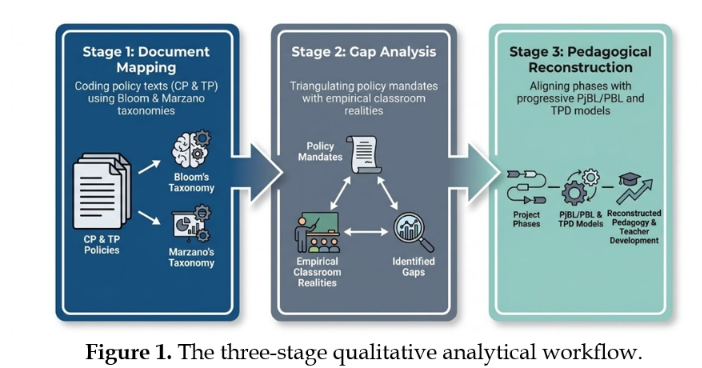
This study investigates the vertical alignment and pedagogical translation of competency-based curricula across developmental phases, addressing the critical research gap between normative policy mandates and actual classroom enactment. Employing a qualitative document analysis and policy-practice synthesis, we evaluated a targeted corpus of national policy directives (Capaian Pembelajaran) alongside peer-reviewed empirical evaluations (2020–2026) using Bloom and Marzano's cognitive taxonomies. The analysis reveals a profound, systemic policy-practice gap across three dimensions: a cognitive mismatch between mandated higher-order thinking and entrenched rote-memorization, pedagogical barriers due to teacher-centered transmission, and assessment inertia. While the policy outlines a progressive, multi-phase cognitive continuum—transitioning from lower-secondary dynastic narratives to upper-secondary global civilizational synthesis—actual instruction remains decoupled from these standards. To resolve this, we propose a reconstructed pedagogical framework that structurally aligns instructional models with curriculum phases, prioritizing Project-Based Learning (PjBL) for digital artifact creation in lower-secondary levels and Problem-Based Learning (PBL) for historical inquiry in upper-secondary levels. This study advances curriculum scholarship by offering a replicable, phase-aligned model for religious humanities education, demonstrating how structured active learning can bridge universal policy-practice divides in global competency-based reforms
Downloads
References
Anderson, & Krathwohl. (2001). A Taxonomy for Learning, Teaching, and Assessing: A Revision of Bloom’s Taxonomy of Educational Objectives.
Cheema, G. K., Rather, M. A., Aggarwal, V., Mandloo, S. A., & Faustino, A. (2026). Competency-Based Curricula and Technology: Game Changers for Literature Subjects in Secondary Schools in Arusha City, Tanzania. Journal of Interdisciplinary Studies in Education, 15(5), 195–214. https://doi.org/10.32674/3yqn3z42
Christopher, M., & Jones, M. (2025). Evaluating contexts for implementing a competency-based curriculum in south and eastern Africa: A meta-narrative review. Curriculum Journal, 36(3), 368–383. https://doi.org/10.1002/curj.301
Derouich, M. (2025). Ensuring outcome-based curriculum coherence through systematic CLO–PLO alignment and feedback loops. Discover Education, 4(1). https://doi.org/10.1007/s44217-025-00915-7
Kabir, S. M. A. (2023). English Language at Secondary Level in Bangladesh: (Dis)connections Between Policy and Practice of Oral Skills. Qualitative Report, 28(1), 301–322. https://doi.org/10.46743/2160-3715/2023.5761
Kasuga, W., & Kalolo, J. F. (2025). Competency-based curriculum in Tanzania: Charting dilemmas for successful implementation. Cogent Education, 12(1). https://doi.org/10.1080/2331186X.2025.2563711
Kelly, K. T. (2023). The Logic of Success. In Philosophy of Science Today (pp. 11–38). Oxford University Press. https://doi.org/10.1093/oso/9780199250547.003.0002
Majani, W. P. (2026). Demystifying the policy-practice gap in Tanzania educational change landscape. African Identities. https://doi.org/10.1080/14725843.2026.2653772
Marzano, & Kendall. (2007). New Taxonomy of Educational Objectives Adapted from Marzano & Kendall.
Maylawati, D. S., Mulyana, R., Rizqullah, N., Nurjaman, I., & Ramdhani, M. A. (2025). Assessing Indonesian Islamic schools’ readiness for the independent curriculum using text analytics. Multidisciplinary Reviews, 8(10). https://doi.org/10.31893/multirev.2025336
Miles, M. B., Huberman, A. M., & Saldaña, J. (2014). Qualitative Data Analysis: A Methods Sourcebook (3rd ed.). Sage publications.
Mpate, H. (2025). Biology teachers’ implementation of the competence based curriculum in Tanzania: challenges and opportunities. Journal of Biological Education, 59(1), 16–36. https://doi.org/10.1080/00219266.2023.2282428
Mujiburrahman, Ratnaya, I. G., Parwata, I. G. L. A., & Budhyani, I. D. A. M. (2025). Evaluation of the Merdeka Curriculum in Educational Institutions: A Systematic Literature Review of Strategies, Challenges, and Student Learning Outcomes. Jurnal Paedagogy: Jurnal Penelitian Dan Pengembangan Pendidikan, 12(4), 1255–1268.
Mwangi, N. M., Karuku, S., & Obura, E. (2026). Teacher preparedness for competency-based curriculum in Kenyan schools: training and perceptions prior to implementation. International Journal of Evaluation and Research in Education, 15(1), 714–724. https://doi.org/10.11591/ijere.v15i1.35742
Nabilah, N., & Suyanto, S. (2025). A CIPP-based evaluation of critical thinking in science : Implementation of the Merdeka curriculum in Mataram public junior high schools. STEM Education, 5(May), 587–616. https://doi.org/10.3934/steme.2025028
Nugraha, I. R. R., Supriadi, U., & Firmansyah, M. I. (2023). Efektivitas Strategi Pembelajaran Project Based Learning dalam Meningkatkan Kreativitas Siswa. Jurnal Penelitian Dan Pendidikan IPS (JPPI), 17(1), 39–47.
Page, M. J., Moher, D., Bossuyt, P. M., Boutron, I., Hoffmann, T. C., Cynthia, D., Shamseer, L., Tetzlaff, J. M., Akl, E. A., Brennan, S. E., Chou, R., Glanville, J., Grimshaw, J. M., Hróbjartsson, A., Lalu, M. M., Li, T., Loder, E. W., Mcdonald, S., Mcguinness, L. A., … Mckenzie, J. E. (2021). PRISMA 2020 explanation and elaboration: updated guidance and exemplars for reporting systematic reviews.
Pratami, D., Akhmal, N. H., Maulana, M. I. I. M., & Hassan, S. A. H. S. (2024). Introducing Project-Based Learning Steps To The Preschool Teachers In Bandung, Indonesia. Journal of Technology and Science Education, 14(3), 883–902.
Rahayu, B. M., Muhyidin, A., & Jamaludin, U. (2026). Integrating local wisdom into digital teaching materials for next-generation competencies in future education: A systematic literature review. Multidisciplinary Reviews, 9(8). https://doi.org/10.31893/multirev.2026366
Rodas, J. J. M. (2020). Competences evaluation in knowledge fields, a look at the curriculum. Revista de Humanidades (SPAIN), 39, 175–204. https://doi.org/10.5944/RDH.39.2020.22617
Shi, F., Yang, Q., Zhang, M.-X., & Wang, X.-T. (2026). Translating policy into practice: teacher agency amid cognitive and ecological constraints in enacting competency-based assessment. Frontiers in Psychology, 17. https://doi.org/10.3389/fpsyg.2026.1836710
Suari, S., Indrawadi, J., & Syahriani, F. (2023). Exploration of Learning Strategies in the Social Studies Based on the Merdeka Curriculum. Al-Ta’lim Journal, 30(1), 195–210. https://doi.org/10.15548/jt.v30i2.920
Septaria, K., Nadhiroh, S., Setyaningsih, S., Dewanti, B. A., Asy'ad, W. A., & Sa'diyyah, L. (2026). Penerapan Model Predict-Observe-Explain untuk Mengembangkan Keterampilan Pemecahan Masalah Pada Materi Klasifikasi Materi. Edukimbiosis: Jurnal Pendidikan IPA, 5(1), 28-49.
Faridah, F., Luthfiyati, D., Fatmawaty, R., Asrori, M., Sukardi, S., Septaria, K., & Zamroni, M. R. (2026). Peningkatan Kapasitas Publikasi Ilmiah Guru MIUS Lamongan melalui Pelatihan Pemetaan Bibliometrik dan Pendekatan Futures Thinking. Bhakti Nusantara: Jurnal Pengabdian Kepada Masyarakat, 2(1), 25-43.
Huda, M., Septaria, K., Rosdiana, S. R., Shafikha, R., & Salami, W. (2026). DEVELOPING AUGMENTED REALITY-BASED LEARNING MEDIA FOR TSUNAMI MITIGATION TO ADDRESS STUDENT MICRO-LEARNING CHALLENGES. JPPIPA (Jurnal Penelitian Pendidikan IPA), 11(1), 33-47.
Fatharani, A., Madlazim, M., Anggaryani, M., Satriawan, M., & Septaria, K. (2026). Learning from Earthquakes: The Role of Socio-Scientific Issues in Developing Students’ Science Argumentation Skills. Prisma Sains: Jurnal Pengkajian Ilmu dan Pembelajaran Matematika dan IPA IKIP Mataram, 14(1), 123-143.
Septaria, K., Asrori, M., Setyo, C. Y., Faridah, F., Anam, M. K., Sukardi, S., & Kholiq, A. (2025). Pemberdayaan Guru Ma'arif melalui Pemanfaatan Deep Learning Engagement Tools untuk Peningkatan Literasi Digital dan Pedagogis. Bhakti Nusantara: Jurnal Pengabdian Kepada Masyarakat, 1(1), 25-39.
Khasanah, S. N., Septaria, K., & Rosdiana, S. R. (2025). Developmet Of WE-ARe Based Teaching Modules on Flood Disaster Mitigation Material to Train Students' Scientific Literacy. Indonesian Journal of Mathematics and Natural Science Education, 6(2), 142-158.
Septaria, K., Fatharani, A., & Baihaqi, A. (2025). Are Scrapbooks Able to Increase Tsunami Disaster Literacy? An Analytical Study of Junior High School Students Materials. SEJ (Science Education Journal), 9(2), 115-133. https://doi.org/10.21070/sej.v9i2.1656
Septaria, K., Fatharani, A., Supardi, Z. A. I., Suyono, S., & Regita, M. A. (2025). Pengembangan Sikap Ilmiah Abad 21 Melalui Lembar Kerja Berbasis Teori Pembelajaran Sosial pada Materi Listrik Statis. Jurnal Penelitian Sains dan Pendidikan (JPSP), 5(1), 65-86. https://doi.org/10.23971/jpsp.v5i1.9758
Sho'idah, Y., Septaria, K., & Wulandari, S. A. (2025). Analysis of Student Scientific Communication Based on The Development and Use of Diorama Media Using The Guided Inquiry Model. Reforma: Jurnal Pendidikan dan Pembelajaran, 15(1), 24-47. https://doi.org/10.30736/reforma.v15i1.1207
Hendratmoko, A. F., Puspitarini, S., Budiyanto, M., Rahman, N., Septaria, K., & Marpuah, S. (2025). Think-Aloud Protocol as a Method for Exploring and Understanding the Argumentation Skills of Pre-Service Science Teachers. Prisma Sains: Jurnal Pengkajian Ilmu dan Pembelajaran Matematika dan IPA IKIP Mataram, 13(2), 268-282. https://doi.org/10.33394/j-ps.v13i2.15214
Septaria, K., Fatharani, A., Dewanti, B. A., & Najawa, W. C. (2024). Designing Pirposal-learning based Module integrated with Socio-Scientific Issue to Enhance Students’ Scientific Reasoning Skill. Indonesian Journal of Mathematics and Natural Science Education, 5(2), 122-134. https://doi.org/10.35719/mass.v5i2.162
Septaria, K., Nissak, K., & Wulandari, S. A. (2023). Student Identity and Guided Inquiry Learning in Junior High School Students: A Correlation Analysis. Jurnal Penelitian Pendidikan IPA, 9(10), 8351-8358. https://doi.org/10.29303/jppipa.v9i10.4584
Septaria, K., Dewanti, B. A., & El Afidah, M. I. (2020). Development of module disaster mitigation based on STEM for secondary schools. JPPIPA (Jurnal Penelitian Pendidikan IPA), 5(2), 61-68. https://doi.org/10.26740/jppipa.v5n2.p61-68
Septaria, K. (2019). Mengeksplorasi Argumentasi dan Pengetahuan Pendidik Ilmu Pengetahuan Alam (IPA) tentang Pemanasan Global. PEDAGOGIA: Jurnal Pendidikan, 8(2), 247-256. https://doi.org/10.21070/pedagogia.v8i2.2369
Septaria, K., & Fatharani, A. (2022). Analisis Penggunaan Software PlantNet Terhadap Pemerolehan Konsep Dan Keterampilan Prosedural Siswa. Indonesian Journal of Educational Science (IJES), 5(1), 73-83. https://doi.org/10.31605/ijes.v5i1.1604
Septaria, K., Dewanti, B. A., & Habibbulloh, M. (2019). Implementasi metode pembelajaran spot capturing pada materi pemanasan global untuk meningkatkan keterampilan proses sains. Prisma Sains: Jurnal Pengkajian Ilmu dan Pembelajaran Matematika dan IPA IKIP Mataram, 7(1), 27-37. https://doi.org/10.33394/j-ps.v0i0.1379
Septaria, K., & Fatharani, A. (2022). Manga versus webtoon: Alternative science learning module based on Dr Stone. Jurnal Inovasi Pendidikan IPA, 8(1), 11-22. https://doi.org/10.21831/jipi.v8i1.43389
Septaria, K., & Haque, E. H. (2022). Upaya Peningkatan Pengetahuan Masyarakat terhadap Covid-19 Menggunakan Media Poster. TAAWUN, 2(02), 115-124.
Septaria, K., Sholihin, M., Kholiq, A., Hayati, E., & Maulana, V. I. P. (2022). Peningkatan Kualitas Pendidik dan Pembelajaran Menuju Madrasah yang Ungggul dan Berkelanjutan. Jurnal Berdaya Mandiri, 4(2), 167-181. https://doi.org/10.31316/jbm.v4i2.1742
Wardani, H. K. (2023). Analysis of the Impact of the Merdeka Curriculum Policy on Stakeholders at Primary School. The Indonesian Journal of the Social Sciences, 11(2).
Downloads
Published
How to Cite
Issue
Section
License
Copyright (c) 2026 Marwal Blantara Susetyo, Kharisma Pratama Nurhidayat, Muhammad Fahri Ali Husaeni, Mifta Ghina Dzakiya, Ridwan Maulana

This work is licensed under a Creative Commons Attribution-ShareAlike 4.0 International License.
Penulis yang mempublikasikan naskahnya pada Jurnal ini menyetujui ketentuan berikut:
- Hak cipta pada setiap artikel adalah milik penulis, dan penulis mengakui bahwa Reforma : Jurnal Pendidikan dan Pembelajaran berhak sebagai pihak yang mempublikasikan pertama kali dengan lisensi Attribution-ShareAlike 4.0 International (CC BY-SA 4.0).
- Lisensi ini mengizinkan setiap orang untuk:
- Berbagi — menyalin dan menyebarluaskan kembali materi ini dalam bentuk atau format apapun;
- Adaptasi — menggubah, mengubah, dan membuat turunan dari materi ini untuk kepentingan apapun, termasuk kepentingan komersial.
Berdasarkan ketentuan berikut:
- Atribusi —Mereka harus mencantumkan nama yang sesuai, mencantumkan tautan terhadap lisensi, dan menyatakan bahwa telah ada perubahan yang dilakukan. Mereka dapat melakukan hal ini dengan cara yang sesuai, namun tidak mengisyaratkan bahwa pemberi lisensi mendukung Mereka atau penggunaan Mereka.
- BerbagiSerupa — Apabila Mereka menggubah, mengubah, atau membuat turunan dari materi ini, Mereka harus menyebarluaskan kontribusi Mereka di bawah lisensi yang sama dengan materi asli.
- Tidak ada pembatasan tambahan — Mereka tidak dapat menggunakan ketentuan hukum atau sarana kontrol teknologi yang secara hukum membatasi orang lain untuk melakukan hal-hal yang diizinkan lisensi ini.
- Penulis dapat memasukan tulisan secara terpisah, mengatur distribusi non-ekskulif  dari naskah yang telah terbit di jurnal ini kedalam versi yang lain (misal: dikirim ke respository institusi penulis, publikasi kedalam buku, dll), dengan mengakui bahwa naskah telah terbit pertama kali pada Reforma : Jurnal Pendidikan dan Pembelajaran